Using AI to Understand Your Strengths and Weaknesses
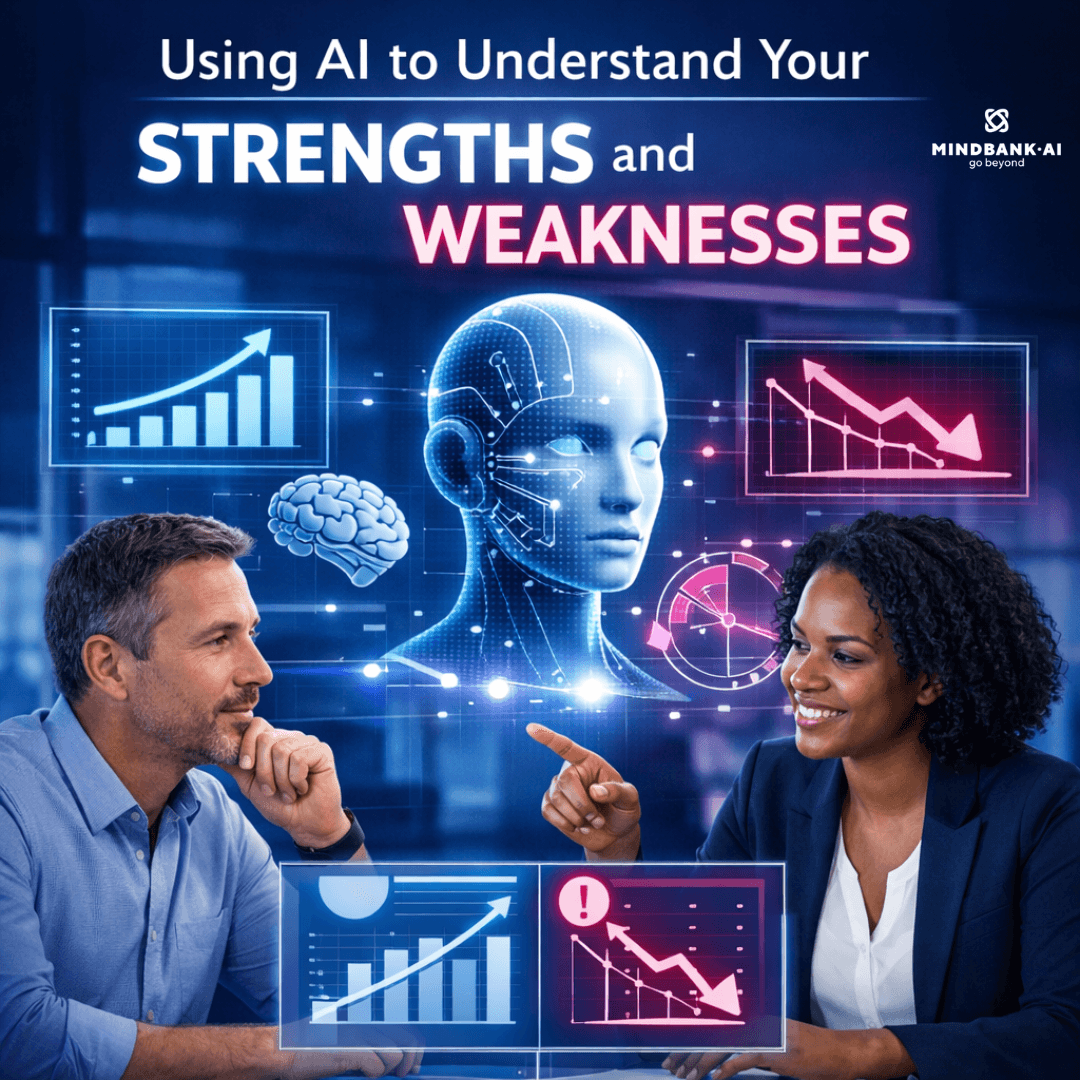
How Artificial Intelligence Supports Self-Awareness by Analyzing Behavioral Patterns, Performance Data, and Professional Skills
Understanding Strengths and Weaknesses
Understanding personal strengths and weaknesses is one of the most important aspects of professional growth. In many careers, individuals are expected to continuously improve their skills, adapt to new challenges, and collaborate effectively with others. However, identifying personal abilities and areas for improvement is not always easy. Self-assessment often relies on personal perception, which can sometimes be incomplete or biased.
Artificial Intelligence is beginning to offer new ways for individuals to gain deeper insight into their capabilities. By analyzing behavioral patterns, performance data, and work habits, AI systems can provide valuable feedback that helps professionals better understand their strengths and weaknesses.
AI-Based Self-Assessment Tools
The use of AI-based self-assessment tools is becoming increasingly common in professional development and corporate training environments. These systems analyze different types of data related to an individual’s performance, decision-making patterns, communication style, and productivity. By identifying trends in this information, AI tools can highlight areas where individuals perform particularly well as well as areas where improvement may be beneficial.
For example, AI systems might analyze how individuals approach problem-solving tasks, how they manage time, or how they collaborate with team members. Through this analysis, the system can generate insights that help individuals recognize their most effective working styles.
This process helps professionals begin identifying personal strengths that may not always be obvious. Some individuals may excel at analytical thinking, while others may demonstrate strong creativity, communication skills, or strategic planning abilities. AI systems can highlight these patterns and provide objective insights that support self-awareness.
Identifying Areas for Improvement
At the same time, AI tools can also help with detecting areas for improvement. Instead of presenting weaknesses as failures, AI systems frame them as opportunities for growth and skill development.
For instance, a professional might discover that they consistently delay complex tasks or struggle with prioritizing multiple responsibilities. By recognizing these patterns early, individuals can begin developing strategies to improve their productivity and effectiveness.
Continuous Behavioral Analysis
One of the most valuable aspects of AI-supported self-assessment is its ability to analyze behavioral pattern analysis over time. Traditional evaluations often occur only once or twice a year during performance reviews. In contrast, AI systems can continuously analyze behavior and performance patterns, providing ongoing insights that evolve as individuals develop new skills.
This continuous feedback allows professionals to track their progress more effectively and observe how their behavior changes over time. It also encourages a mindset of continuous learning, where individuals regularly reflect on their performance and adapt their strategies accordingly.
Objectivity and Human Reflection
Another advantage of AI-assisted self-assessment is objectivity. Human self-evaluation can sometimes be influenced by emotions, stress, or external pressures. AI systems rely on data patterns rather than subjective judgment, which can provide a clearer picture of how individuals actually perform in different situations.
However, AI feedback is most effective when combined with human reflection. AI systems can identify patterns and provide recommendations, but individuals must interpret these insights and apply them within their professional context.
AI in Corporate Learning
Corporate learning and development programs increasingly integrate AI-supported self-assessment into their training environments. Organizations recognize that professional growth requires more than technical knowledge—it also requires self-awareness and the ability to reflect on one’s performance.
MindBank offers learning experiences designed to help professionals explore their strengths and weaknesses through AI-supported insights. Within these environments, participants interact with AI tools that analyze decision-making patterns, behavioral tendencies, and performance data.
Through structured exercises, participants learn how to interpret AI-generated feedback and apply these insights to their personal development strategies.
Reflection and Continuous Improvement
MindBank’s approach emphasizes reflection and continuous improvement. Rather than simply receiving feedback, participants are encouraged to examine their behavioral patterns and experiment with new strategies for improving their performance.
For example, a professional who discovers through AI analysis that they are highly effective in strategic planning but struggle with delegation may explore techniques for improving team collaboration. Similarly, individuals who demonstrate strong analytical abilities may focus on strengthening communication skills to better share their insights with others.
This process transforms self-assessment into a dynamic learning experience rather than a static evaluation.
Collaboration and Future Development
Another important benefit of AI-supported self-awareness is its potential to improve collaboration within teams. When individuals understand their own strengths and weaknesses, they can contribute more effectively to group projects and organizational goals.
Teams often function best when members recognize how their abilities complement one another. AI insights can help individuals understand their role within a team and identify opportunities to support colleagues in areas where their skills are strongest.
As artificial intelligence continues to evolve, its ability to support professional self-awareness will likely expand. Future AI systems may incorporate more sophisticated behavioral analysis, communication assessments, and cognitive performance insights.
These technologies may help professionals gain even deeper understanding of their capabilities and development opportunities.
Conclusion
Ultimately, the goal of using AI to understand strengths and weaknesses is not to label individuals but to support continuous growth. Artificial intelligence provides data-driven insights, but individuals remain responsible for interpreting those insights and deciding how to apply them.
By combining AI-based self-assessment, identifying personal strengths, detecting areas for improvement, and deeper behavioral pattern analysis, professionals can develop a clearer understanding of their abilities and create more effective strategies for personal and professional development.