Training Students to Think Critically With AI
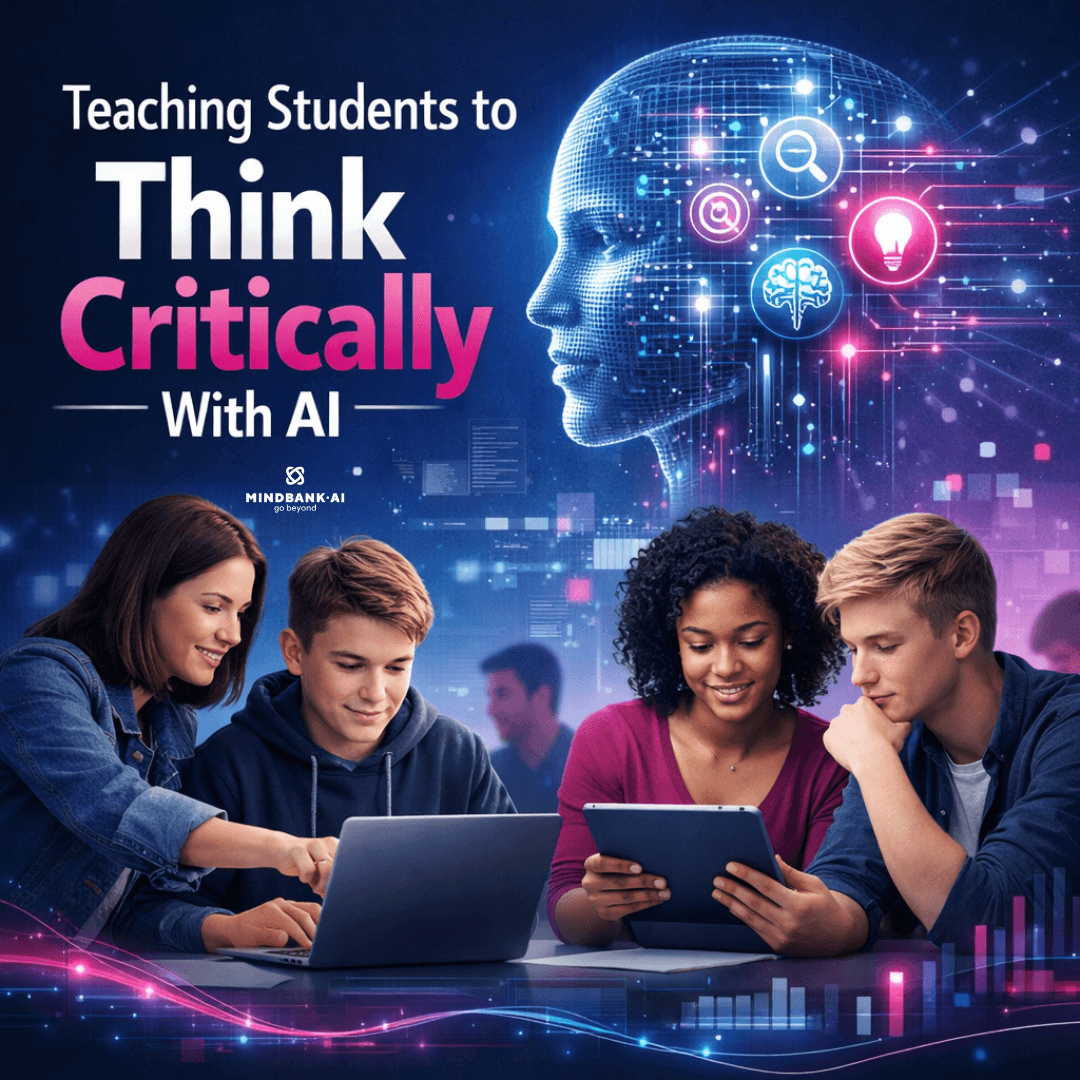
Using Artificial Intelligence to Help Students Analyze Arguments, Explore Complex Problems, and Develop Independent Thinking
The Role of Artificial Intelligence in Modern Education
Artificial Intelligence is rapidly becoming a powerful tool in education, offering new ways for students to explore information, solve problems, and develop important cognitive skills. Among these skills, critical thinking stands out as one of the most essential abilities for students in the modern world. In an age where information is widely available and constantly expanding, students must learn not only how to access information but also how to analyze, question, and evaluate it.
AI technologies can support this process by encouraging students to engage more deeply with ideas and information. Rather than simply providing answers, many AI powered systems can guide students through discussions, present alternative perspectives, and challenge assumptions. When used correctly, AI can become a valuable tool for training critical thinking skills and helping students become more independent and reflective learners.
Understanding Critical Thinking in a Digital World
Critical thinking involves the ability to evaluate information, identify biases, analyze arguments, and make reasoned judgments. These abilities are increasingly important in a digital environment where students encounter large amounts of information online. Artificial intelligence can support the development of these skills by creating interactive learning environments where students actively engage with ideas rather than passively receiving information.
Encouraging Students to Question Information
One of the most useful ways AI can support critical thinking is by encouraging students to question information. Instead of presenting information as absolute truth, AI tools can prompt students to analyze sources, compare perspectives, and evaluate evidence. For example, an AI system might ask students to explain why a particular argument is strong or weak, encouraging deeper reflection and reasoning.
These types of interactions help students develop analytical thinking by forcing them to consider multiple viewpoints. When students compare different explanations or interpretations, they learn how to evaluate information more carefully and avoid accepting ideas without questioning them.
Learning Through Dialogue and Interaction
AI tools can also support learning through dialogue. Some AI platforms are designed to simulate discussions where students must defend their ideas, respond to questions, and refine their arguments. These interactions encourage students to think more deeply about their reasoning and develop stronger communication skills.
For example, a student studying philosophy or history might interact with an AI system that asks questions about the causes of historical events or the implications of ethical decisions. The student must analyze the situation, justify their reasoning, and consider alternative viewpoints.
This process strengthens both reasoning and communication skills, which are key components of critical thinking.
Exploring Complex Problems with AI Simulations
Another way AI supports critical thinking is by presenting complex scenarios that require problem solving and evaluation. AI powered simulations allow students to explore situations where there may be no single correct answer. Students must analyze the available information, consider possible outcomes, and make decisions based on their reasoning.
For instance, students studying economics might analyze market scenarios generated by AI systems. They may need to consider how different factors influence economic decisions and evaluate the potential consequences of various strategies.
Similarly, students studying environmental science might use AI simulations to explore how different policies impact ecosystems. These exercises encourage students to apply critical thinking skills in realistic and complex situations.
Identifying Bias and Evaluating Information
AI can also help students identify biases in information. In today’s digital environment, misinformation and biased sources are common challenges. Students must learn how to evaluate the credibility of information and recognize when sources may present incomplete or misleading perspectives.
AI tools can support this learning process by highlighting potential biases in texts, comparing multiple sources, or encouraging students to investigate the reliability of information. These activities help students become more thoughtful and informed consumers of information.
Reflecting on Thinking and Decision Making
Another important aspect of critical thinking is the ability to reflect on one’s own reasoning. AI tools can encourage reflection by asking students to explain how they reached a conclusion or why they chose a particular solution.
For example, after completing a problem solving exercise, an AI system might ask the student to describe their reasoning process. This type of reflection helps students become more aware of their thinking patterns and improves their ability to evaluate their own decisions.
The Role of Teachers in AI Supported Learning
Teachers also play a crucial role in helping students develop critical thinking skills with AI tools. While AI can generate questions and scenarios, educators guide students in interpreting these experiences and connecting them to broader concepts.
Teachers can design activities where students use AI tools to explore ideas and then discuss their findings in the classroom. These discussions help students refine their reasoning and learn from the perspectives of their peers.
Creating a Safe Space for Experimentation
Another important benefit of AI assisted learning is that it allows students to experiment with ideas in a low risk environment. Students can test arguments, explore different perspectives, and revise their thinking without fear of making mistakes.
This encourages intellectual curiosity and experimentation, both of which are essential for developing strong critical thinking skills.
AI as a Thinking Partner Not a Replacement
However, it is important to remember that AI should support critical thinking rather than replace it. If students rely too heavily on AI generated answers without analyzing them, they may miss the opportunity to develop independent reasoning skills.
Students should learn to treat AI as a thinking partner rather than a source of final answers. By questioning the information provided by AI systems and exploring alternative perspectives, students can strengthen their analytical abilities.
Teaching Responsible Use of Artificial Intelligence
Educational institutions also have an important role in teaching students how to use AI responsibly. Students should understand both the strengths and limitations of AI tools and learn how to verify the accuracy of AI generated information.
As artificial intelligence becomes more integrated into education, the ability to think critically about information and technology will become even more important.
The Future of AI and Critical Thinking in Education
Looking ahead, AI will likely continue to support the development of critical thinking in education. New technologies may provide more advanced simulations, interactive debates, and intelligent tutoring systems that encourage deeper reasoning.
By combining the guidance of teachers with the capabilities of AI powered learning tools, education can create environments where students actively engage with ideas and develop strong analytical skills.
Conclusion: Teaching Students How to Think
Ultimately, the goal of using AI in education is not simply to provide information but to help students learn how to think. When used effectively, artificial intelligence can become a powerful resource for training critical thinking skills, strengthening analytical thinking, and preparing students to navigate an increasingly complex world.