Training Better Decision-Making With AI Tools
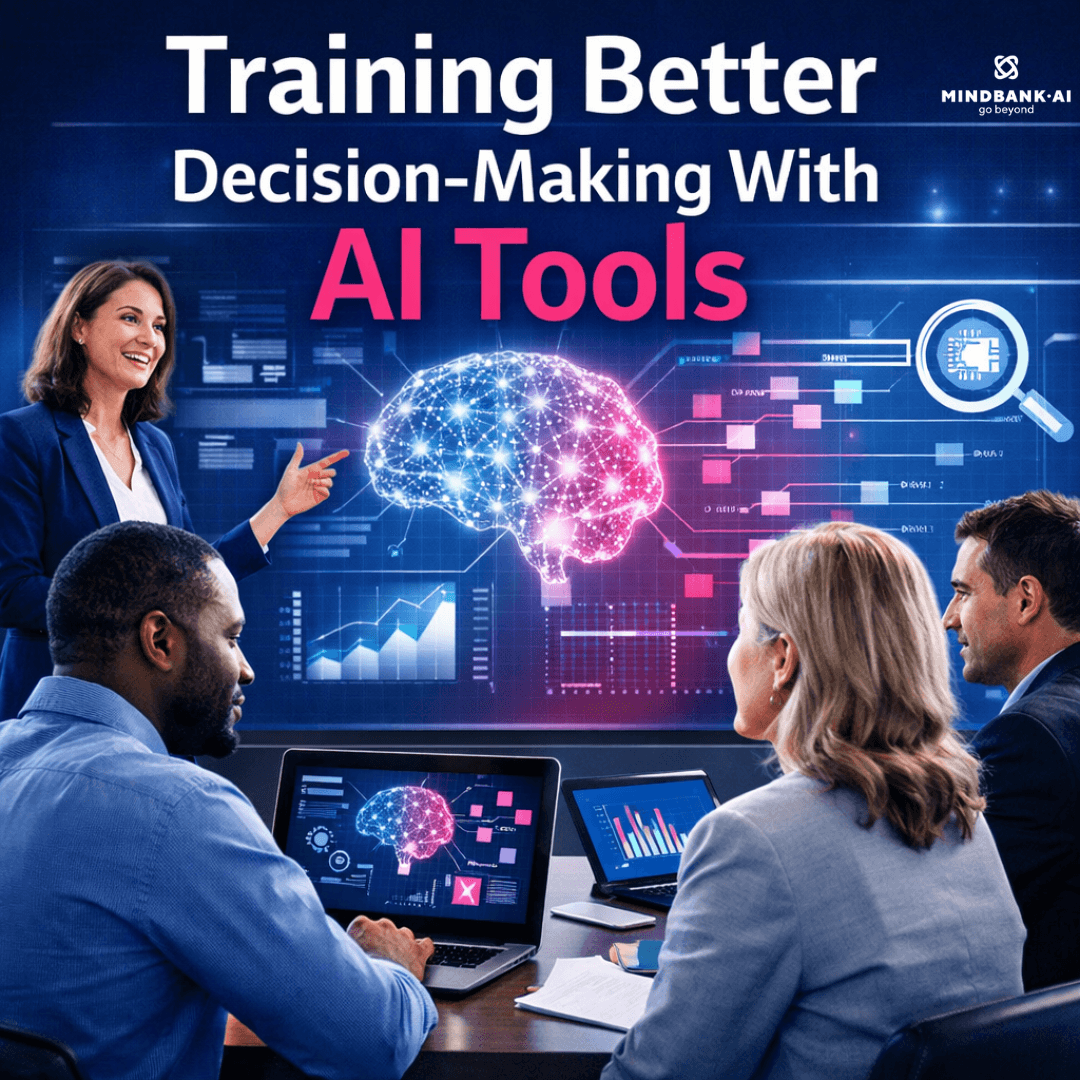
Using Artificial Intelligence to Strengthen Strategic Thinking, Analyze Complex Data, and Improve Organizational Decision Making
In today’s complex and rapidly evolving business environment, decision-making has become one of the most critical professional skills. Leaders, managers, and professionals are constantly required to analyze information, evaluate risks, and choose between multiple strategic options. The quality of these decisions can directly influence the success of projects, teams, and entire organizations.
However, making effective decisions is often difficult because professionals must process large amounts of information under time pressure. Data may come from multiple sources, and the consequences of decisions are not always immediately clear. Artificial Intelligence is increasingly being used as a powerful tool to support this process by helping professionals analyze information more effectively and explore possible outcomes before making strategic choices.
Data Driven Decision Making With AI
The use of AI decision-making tools is becoming increasingly common in organizations that rely on data-driven strategies. Artificial intelligence systems can analyze large datasets, detect patterns, and identify trends that may not be immediately visible through traditional analysis. By providing deeper insights into business data, AI tools allow professionals to make more informed decisions.
For example, AI-powered analytics platforms can examine historical data related to sales performance, customer behavior, operational efficiency, or financial outcomes. By identifying patterns within this data, these systems can highlight opportunities for improvement or potential risks that might otherwise go unnoticed.
This approach supports data-driven decision making, where professionals base their decisions on evidence and analysis rather than intuition alone.
Scenario Simulation and Strategic Evaluation
Another powerful advantage of AI tools is their ability to simulate different scenarios. Decision-making often involves uncertainty because leaders must predict how certain actions might affect future outcomes. AI systems can model potential scenarios based on available data, allowing professionals to explore how different strategies might perform.
For instance, a company considering a new marketing strategy might use AI simulations to estimate how changes in pricing, advertising, or customer targeting could influence sales performance. By evaluating multiple scenarios, decision-makers can gain a clearer understanding of possible outcomes before implementing their strategies.
Training programs that focus on AI for decision-making help professionals learn how to interpret these insights and integrate them into their strategic thinking.
Human Judgment and AI Collaboration
However, simply having access to AI tools is not enough. Professionals must also develop the ability to critically evaluate AI-generated insights. Artificial intelligence systems provide recommendations based on data patterns, but human judgment remains essential when interpreting these results.
Professionals must consider contextual factors such as organizational goals, ethical considerations, and market conditions when making final decisions.
This combination of human judgment and AI analysis is often described as strategic thinking with AI. In this approach, artificial intelligence supports the analytical process while professionals remain responsible for evaluating the broader implications of decisions.
Corporate Learning and AI Training
Corporate learning programs increasingly focus on developing these hybrid skills. Employees are trained not only to understand how AI systems work but also how to collaborate with these technologies in decision-making processes.
MindBank offers corporate learning experiences designed to help professionals strengthen their decision-making abilities through the use of AI tools. These programs focus on helping participants understand how artificial intelligence can enhance analytical thinking and strategic planning.
Through MindBank’s training environments, professionals explore real-world scenarios in which AI tools are used to analyze past decisions, identify patterns, and evaluate alternative strategies. By examining how previous choices influenced outcomes, participants gain valuable insights into how future decisions might be improved.
Scenario Based Learning and Skill Development
Another important component of these programs involves scenario-based learning. Participants interact with AI-powered simulations that allow them to experiment with different strategic options and observe the potential consequences of their decisions.
This type of learning environment encourages reflection and experimentation. Professionals can explore different approaches, test assumptions, and refine their decision-making processes in a structured and supportive setting.
Over time, these experiences help participants develop stronger analytical habits and greater confidence in their ability to make complex decisions.
Organizational Benefits and Future Readiness
Organizations that invest in corporate learning focused on AI-supported decision-making often experience several benefits. Employees become more comfortable working with data, leaders gain deeper insights into organizational performance, and teams develop a more strategic approach to problem-solving.
As artificial intelligence continues to play a larger role in business operations, the ability to combine human expertise with intelligent analytical tools will become an essential capability for professionals across industries.
Training programs that focus on AI decision-making tools, data-driven decision making, and strategic thinking with AI help organizations prepare their workforce for this future.
Conclusion
By developing these skills, professionals can move beyond intuition-based decision-making and adopt a more analytical and informed approach to leadership and strategy.
Ultimately, the goal of integrating AI into decision-making processes is not to replace human judgment but to enhance it. Artificial intelligence provides powerful analytical support, while human professionals contribute experience, creativity, and ethical awareness.
Together, this collaboration between humans and intelligent technologies can lead to more thoughtful, effective, and strategic decisions in modern organizations.