The Impact of Artificial Intelligence on Modern Education
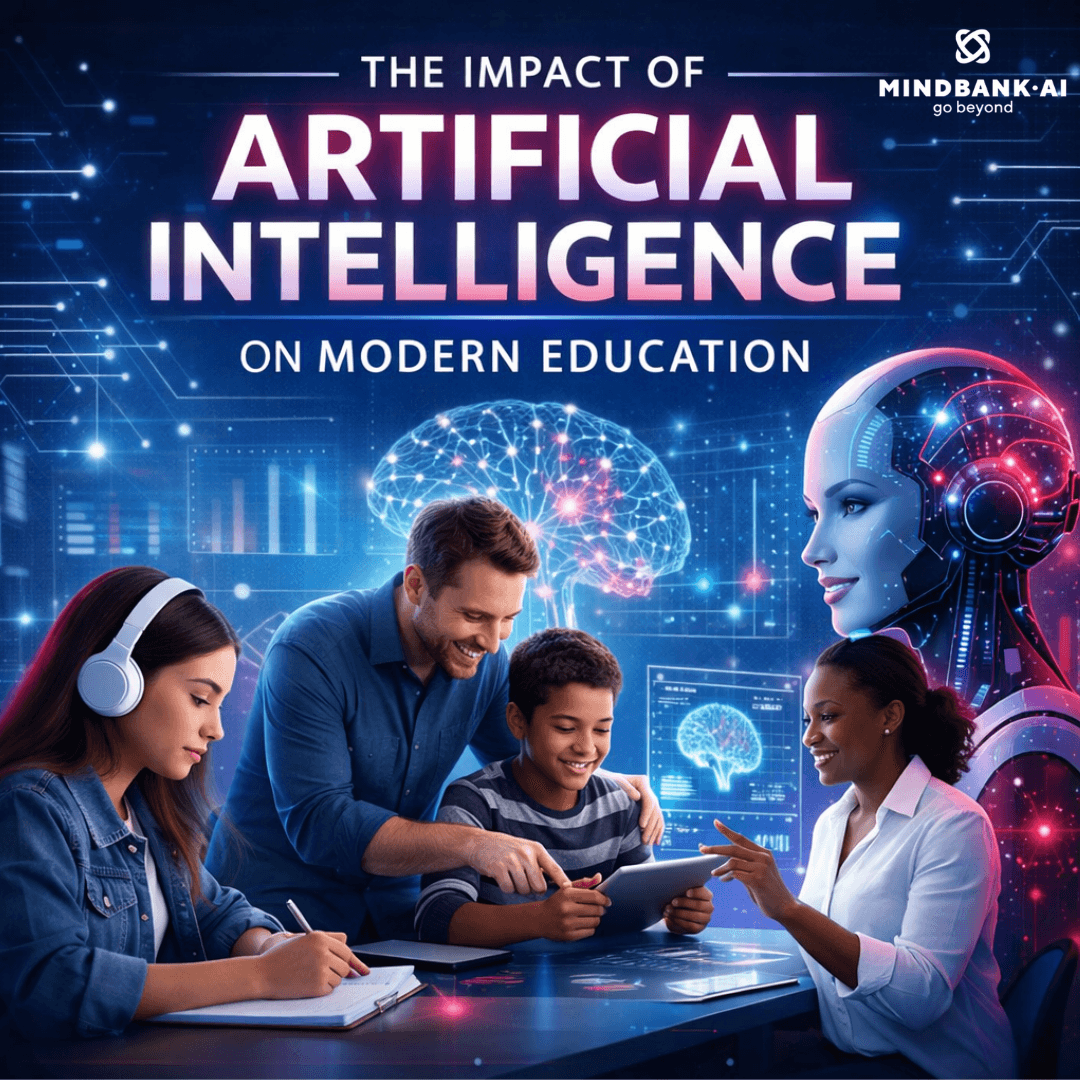
The Growing Role of Artificial Intelligence in Education and How It Is Changing the Way Students Learn and Teachers Teach
Artificial Intelligence is transforming education at a rapid pace, reshaping not only how students learn but also how teachers work. For centuries, the role of education was based on traditional models in which teachers delivered knowledge, students followed structured curricula, and learning was evaluated through standardized exams. However, the rise of digital technologies and artificial intelligence is redefining how education systems function.
Today, AI in education is becoming an essential part of modern learning environments. Artificial intelligence allows educational institutions to analyze large amounts of data, personalize learning experiences, and support both students and teachers through intelligent tools. Instead of replacing educators, AI is designed to enhance their work by providing insights, automating repetitive tasks, and improving the overall learning process.
As schools, universities, and online learning platforms adopt artificial intelligence, education is becoming more flexible, accessible, and adaptive. These technological advances are creating new opportunities for students to learn at their own pace while giving educators the tools they need to better understand student progress.
Digital Classrooms and Data-Driven Learning
One of the most visible changes brought by artificial intelligence is the development of digital classrooms. Traditional classrooms often rely on lectures, textbooks, and written assignments as the primary learning tools. Digital classrooms, on the other hand, integrate technology to create interactive and data-driven learning environments.
In a digital classroom, students can access course materials, recorded lectures, quizzes, and collaborative platforms online. Artificial intelligence enhances these environments by analyzing how students interact with the learning materials. For example, AI systems can track how much time students spend studying certain topics, identify which exercises cause difficulties, and detect patterns in student performance.
This information provides valuable insights for teachers. Instead of waiting for final exams to understand whether students have learned the material, educators can monitor learning progress continuously. This allows them to intervene earlier when students struggle with specific concepts and provide additional support when necessary.
Educational Technology and AI Integration
Another important aspect of the transformation of education is the growth of educational technology. Educational technology refers to the use of digital tools, software platforms, and data systems to support teaching and learning. Artificial intelligence is increasingly integrated into these systems, making them more intelligent and adaptive.
AI-powered educational platforms can automatically grade quizzes, recommend additional learning resources, and generate personalized feedback for students. These tools reduce the amount of time teachers spend on administrative tasks such as grading assignments and organizing materials. As a result, educators can dedicate more time to teaching, mentoring, and supporting students.
For students, educational technology powered by AI offers new ways to learn complex subjects. AI systems can provide explanations, examples, and exercises that adapt to each student’s level of understanding. This makes learning more engaging and helps students overcome difficulties more efficiently.
Personalized Learning and Adaptive Systems
One of the most powerful applications of artificial intelligence in education is personalized learning. Traditional educational systems often follow a one-size-fits-all approach, where all students receive the same instruction at the same pace. However, students have different learning styles, strengths, and challenges.
AI-powered platforms can analyze student performance and create individualized learning paths. If a student struggles with a particular concept, the system can provide additional explanations, exercises, or examples to reinforce understanding. On the other hand, students who master a topic quickly can move forward to more advanced material without waiting for the rest of the class.
This type of adaptive learning helps students remain engaged and motivated. Instead of feeling overwhelmed or bored, learners progress at a pace that matches their abilities.
Supporting Teachers and Improving Student Outcomes
Artificial intelligence also supports teachers by providing valuable insights into student behavior and performance. AI systems can generate reports that highlight patterns in student engagement, participation, and academic progress. These insights help teachers identify students who may need additional support.
For example, an AI-powered learning platform might detect that several students are struggling with the same concept in mathematics. Teachers can use this information to adjust their lessons, provide additional explanations, or introduce new exercises that address the problem.
In this way, artificial intelligence does not replace teachers but rather enhances their ability to support students more effectively.
Accessibility, Challenges, and the Future of AI in Education
Another benefit of AI in education is increased accessibility. Digital learning platforms allow students to access educational materials from anywhere with an internet connection. This is particularly valuable for students who live in remote areas or who cannot attend traditional schools.
AI technologies can also support students with disabilities. For example, speech recognition systems can assist students who have difficulty writing, while text-to-speech tools can help visually impaired learners access written materials. These technologies make education more inclusive and accessible to a wider range of learners.
Despite the many advantages of artificial intelligence, it is important to consider the challenges associated with its use in education. Issues such as data privacy, algorithmic bias, and ethical use of technology must be carefully addressed. Educational institutions must ensure that AI systems are designed and implemented responsibly.
Teachers also play a crucial role in guiding students on how to use artificial intelligence effectively. Students must learn not only how to use AI tools but also how to evaluate information critically and think independently.
Looking ahead, artificial intelligence will likely continue transforming the future of education. Emerging technologies such as intelligent tutoring systems, immersive simulations, and advanced learning analytics may further enhance the learning experience.
The goal of AI in education is not to replace human teachers but to create a collaborative environment where technology supports both educators and learners. By combining human expertise with intelligent tools, education can become more personalized, efficient, and accessible.
Artificial intelligence is therefore not just changing classrooms—it is redefining the entire learning process for the future.