Teaching Students to Use AI Responsibly
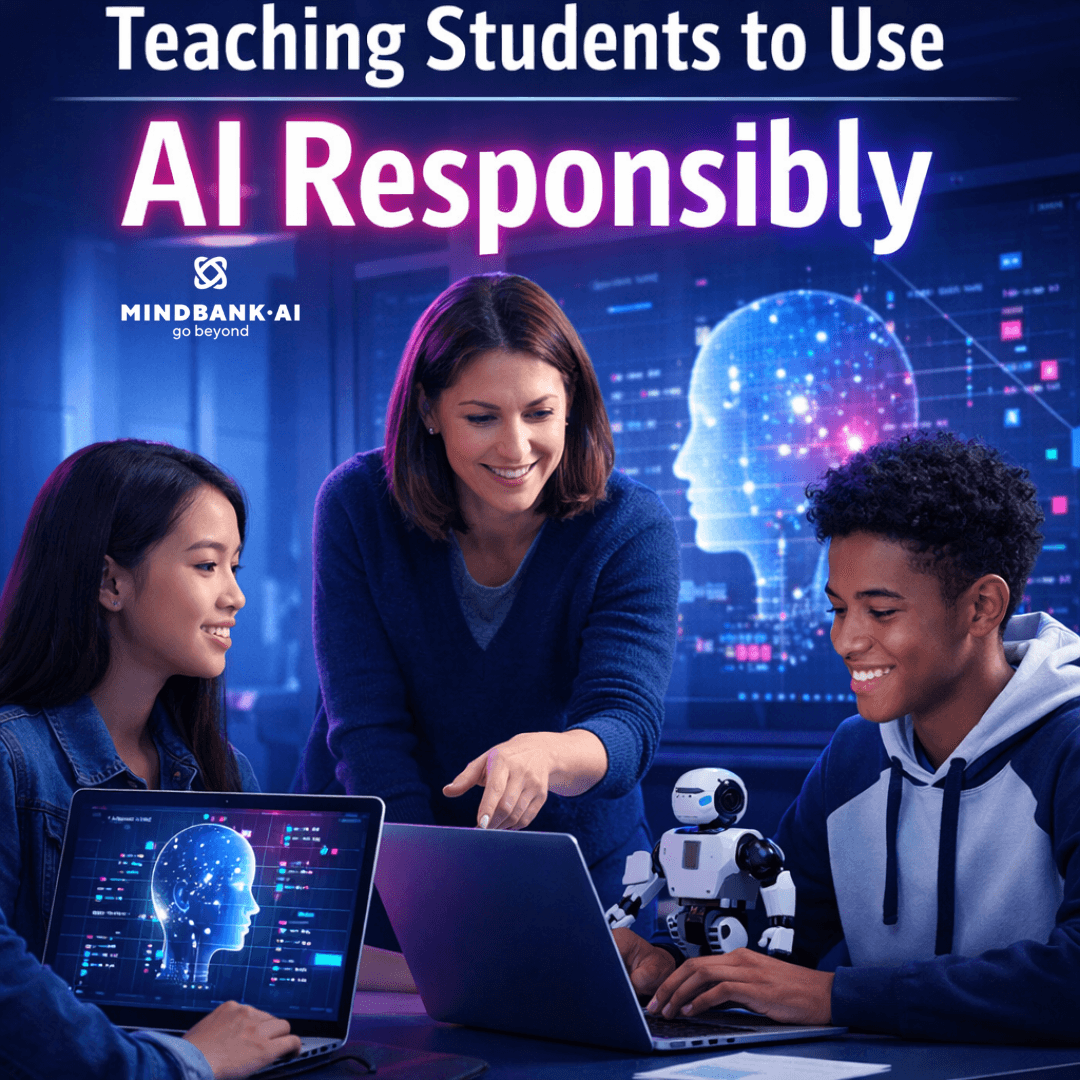
The Importance of Teaching Responsible AI Use in Education
The Role of AI and the Need for Responsibility
Artificial Intelligence is becoming an increasingly important part of modern education. Students today have access to a wide range of AI tools that can help them study, research information, and complete assignments more efficiently. From AI powered writing assistants to intelligent tutoring systems, these technologies are transforming how students interact with knowledge. However, as AI becomes more integrated into education, it is essential to ensure that students learn how to use these tools responsibly.
Training students to use AI responsibly means teaching them how to use technology as a support for learning rather than as a shortcut that replaces thinking and effort. Responsible AI use involves understanding how AI systems work, recognizing their limitations, and applying them ethically within academic environments.
Academic Integrity and Critical Evaluation
One of the most important aspects of responsible AI use is maintaining academic integrity. AI tools can generate text, summarize information, and provide explanations for complex topics. While these capabilities can support learning, students must avoid relying on AI to complete assignments without understanding the material.
Educational institutions are increasingly encouraging students to use AI as a learning assistant rather than as a replacement for their own work. For example, students might use AI to generate explanations of difficult concepts, organize ideas for essays, or review grammar in written assignments. However, they must still develop their own arguments, conduct research, and demonstrate their understanding of the subject.
At the same time, students must learn to evaluate AI generated information critically. Artificial intelligence tools are trained on large datasets and may sometimes produce errors, outdated information, or incomplete explanations. Developing the ability to verify information and question outputs helps students become more thoughtful and independent learners.
Ethics, Bias, and Data Awareness
Another important aspect of responsible AI use is understanding ethics in AI. Students should be aware that AI systems can reflect biases present in their training data and may not always present balanced perspectives.
In addition, responsible use involves respecting privacy and understanding how personal data is collected and used by AI platforms. Learning to recognize bias and protect personal information helps students navigate digital environments more safely and responsibly.
The Role of Teachers and Institutions
Educational institutions play an important role in establishing clear guidelines for how AI can be used in academic work. These guidelines help define what is acceptable and what may compromise academic integrity.
Teachers are equally important in guiding students. By encouraging discussion, critical evaluation, and reflection, educators help students understand both the benefits and limitations of AI. Activities such as analyzing AI responses or comparing them with student generated ideas can strengthen critical thinking skills.
Learning as a Process, Not Just an Outcome
Responsible AI use also means focusing on the learning process rather than just the final result. Students should see education as an opportunity to develop reasoning, creativity, and problem solving skills.
If students rely entirely on AI generated answers, they risk missing important learning experiences. Encouraging students to explain their reasoning, reflect on their thinking, and engage actively with content ensures deeper understanding.
Preparing Students for an AI Driven Future
As artificial intelligence continues to evolve, it will become an even more significant part of both education and the workplace. Students who understand how to use AI responsibly will be better prepared to work alongside intelligent systems.
Ultimately, the goal is not to limit access to AI but to empower students to use it wisely. By combining ethical awareness, critical thinking, and responsible use, education can prepare students to navigate an increasingly complex and technology driven world.