AI Helping a Patient Communicate After Losing Their Voice
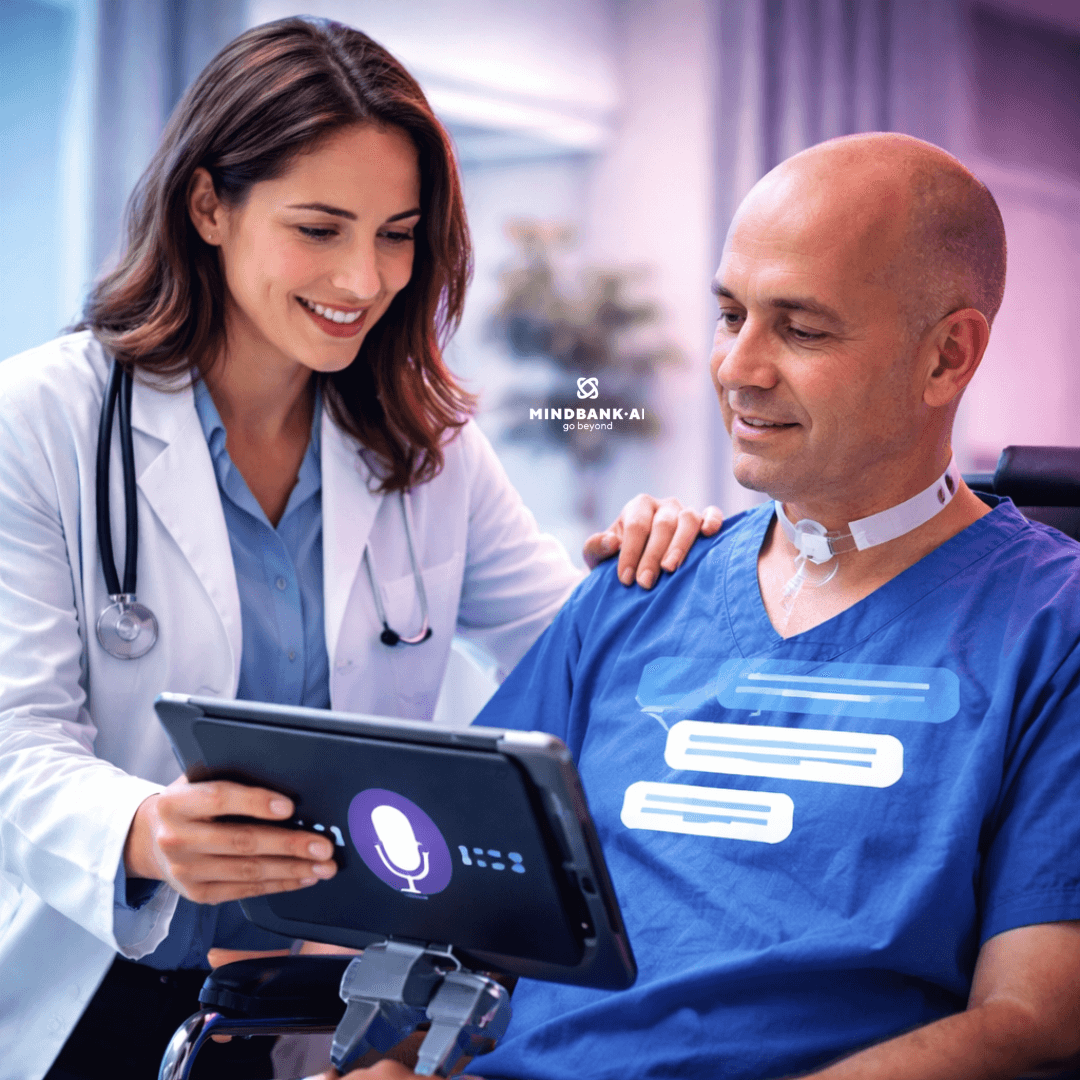
AI Voice Restoration: Helping Patients Communicate and Preserve Identity
Michael had always been someone who loved conversation. Whether he was sharing stories with friends, speaking with his family, or giving advice to his children, communication was at the center of his life. But when he was diagnosed with a neurological condition that gradually affected his ability to speak, something he had always taken for granted suddenly became incredibly difficult.
At first, Michael tried to adapt by writing messages or using simple text-based communication tools. While these methods allowed him to express basic ideas, they did not capture the warmth, tone, and personality that had always defined his voice. For Michael and his family, communication was no longer the same.
How AI Is Transforming Communication for Patients
Advances in artificial intelligence are beginning to change situations like this. Today, AI technologies can help patients who have lost their ability to speak communicate again in ways that feel more personal and natural.
One of the most powerful developments in this field is AI voice restoration technology. Using recordings of a person’s voice or samples collected over time, AI systems can learn the unique characteristics of how someone speaks—such as tone, rhythm, and pronunciation.
Once the system understands these patterns, it can recreate a digital version of that voice. When the patient types or selects messages through an interface, the system converts the text into speech that sounds similar to the person’s original voice.
For individuals like Michael, this type of AI speech assistance allows them to communicate with family members in a way that feels more authentic. Instead of hearing a generic robotic voice, loved ones hear something that resembles the voice they remember.
This can be deeply meaningful for both patients and their families.
AI communication tools for patients can also learn the phrases, expressions, and communication habits that individuals frequently use. Over time, the AI assistant can begin suggesting responses or completing sentences based on the patient’s communication style. This allows conversations to happen more quickly and naturally, reducing the effort required for patients who may already be dealing with physical limitations.
For example, if Michael often used certain phrases when speaking with his children, the AI system can suggest those phrases when similar conversations occur. These tools do not replace the individual’s thoughts or intentions—they help translate those thoughts into speech more efficiently.
Restoring Identity, Connection, and Quality of Life
AI technologies can also help patients maintain their sense of identity. Losing the ability to speak can sometimes make individuals feel disconnected from their personality and social interactions. By preserving elements of a person’s voice and communication style, AI assistive communication technology helps individuals maintain their presence in conversations and relationships.
For many patients, this ability to communicate more naturally can significantly improve emotional well-being and quality of life.
Families also benefit from these technologies. Communication is essential for maintaining strong relationships, especially during times of illness or recovery. When patients can express their feelings, memories, and thoughts more easily, it strengthens the emotional connection between them and their loved ones.
AI communication systems can also support healthcare environments. Patients who are able to communicate their needs more clearly can better explain symptoms, describe discomfort, or ask questions about treatment—improving both care and overall experience.
As artificial intelligence continues to evolve, technologies that support communication for individuals with speech impairments will likely become even more advanced. Future systems may incorporate facial recognition, emotional tone analysis, and predictive language models that further personalize communication experiences.
Ultimately, the goal of these technologies is not simply to restore speech—but to restore connection.
For patients like Michael, the ability to communicate again using a voice that reflects who they are can help preserve relationships, identity, and dignity. Artificial intelligence is making it possible for people who have lost their voices to continue sharing their thoughts, stories, and emotions with the world.